Does reverse osmosis remove PFAS? How to choose a filter for forever chemicals
Last reviewed 2026-11-25.
By Luke Walker, editor (editorial policy). He is not a laboratory scientist, a licensed water-treatment professional, or a public-health official. Facts on this page come from the official sources cited below.
Yes. EPA found reverse osmosis, activated carbon and ion-exchange home filters can greatly reduce PFAS. Pick one certified to NSF/ANSI 58 (reverse osmosis) or NSF/ANSI 53 (carbon or ion exchange) with a PFOA/PFOS or total PFAS claim, and change the cartridges on schedule.
Test first, then treat. The right system depends on what is actually in your water. On a private well, use a state-certified lab (see what to test for). On city water, read your utility’s annual water quality report (Consumer Confidence Report). Already have results? See what your water test results mean.
The three filter types EPA says can work
Activated carbon (GAC or carbon block) traps chemicals as water passes through.
Ion exchange resins attract and hold PFAS.
Reverse osmosis forces water through a very thin membrane that separates out chemicals.
EPA’s research found the carbon, ion-exchange and RO point-of-use systems it studied can greatly reduce PFAS, but only when maintained according to the manufacturer’s replacement schedule.
What certification to look for
NSF/ANSI 53 with a PFOA/PFOS or total PFAS reduction claim for carbon and ion-exchange filters.
NSF/ANSI 58 with a PFAS claim for reverse osmosis.
The “total PFAS” claim added in 2022 covers combined PFOA, PFOS, PFHxS, PFNA, PFHpA, PFBS and PFDA reduced to below 20 parts per trillion, according to Michigan’s PFAS team.
EPA cautions that certification standards (as of April 2024) did not yet show a filter will reach EPA’s newer 4 ppt limits. The certifiers have agreed that PFAS-certified products must meet updated NSF/ANSI 53 and 58 requirements (NSF/ANSI 53-2025 and 58-2025) by January 1, 2030. Until then, lowering PFAS is still an effective way to limit exposure.
Certification is claim by claim. A box that says “NSF/ANSI 53” may be certified only for cyst reduction, not lead or PFAS. Look up the exact model in a certifier’s listing (NSF, WQA, IAPMO, UL or CSA) and match the contaminant on the performance data sheet. See what each NSF/ANSI standard covers.
Filters stated as certified for PFAS reduction
Sponsored
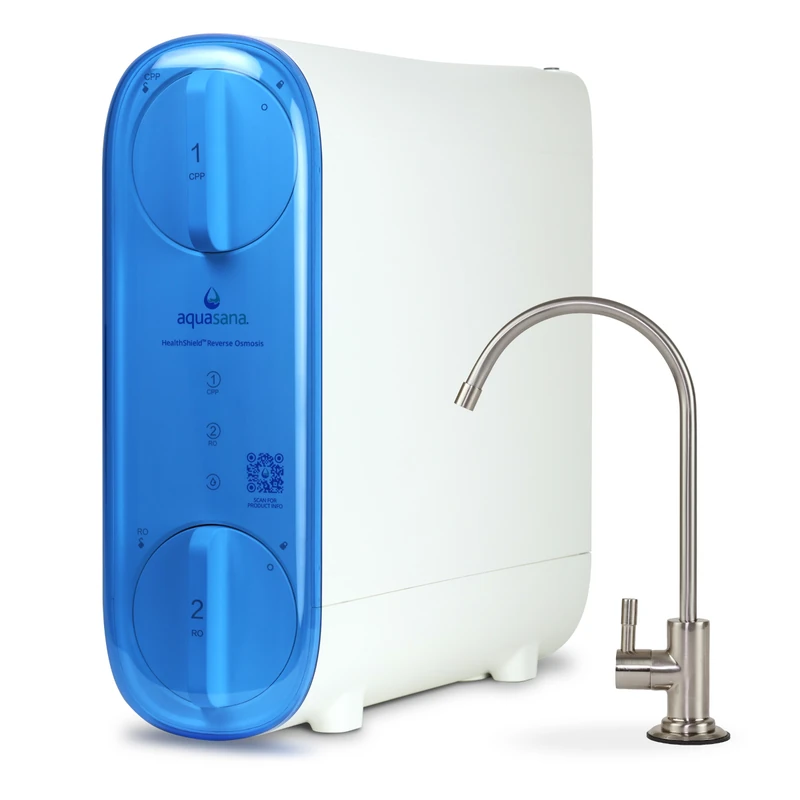
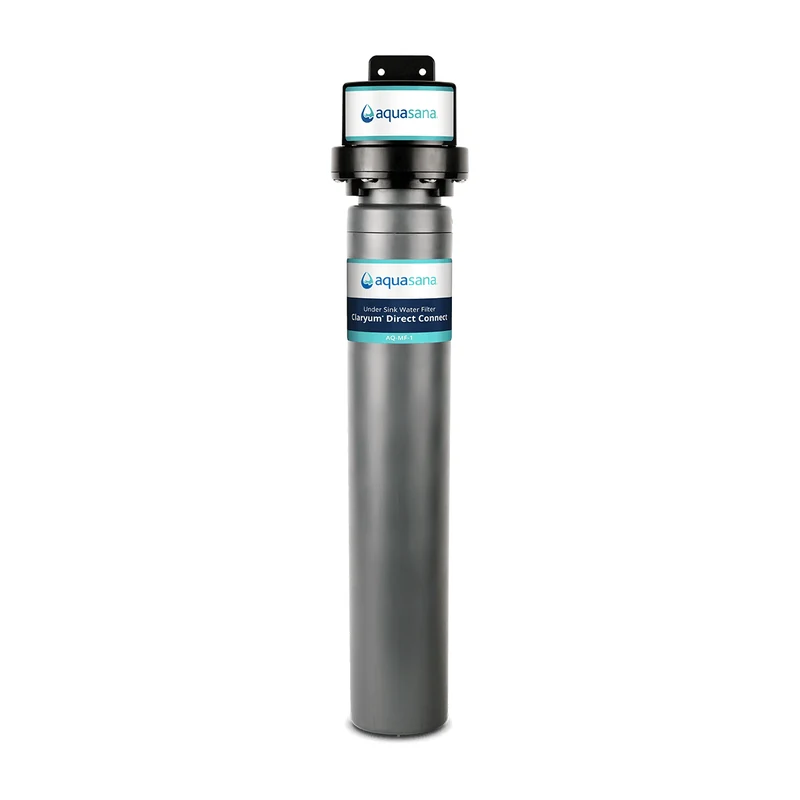
Aquasana states HealthShield RO is IAPMO certified for PFAS reduction and Claryum Direct Connect is IAPMO certified to NSF/ANSI 53 including PFOA/PFOS. One is reverse osmosis, one is carbon.
Certification stated on Aquasana’s Claryum Direct Connect product page, checked November 23, 2026.
We may earn a commission from these links at no extra cost to you. Learn more
Do you need a PFAS filter?
EPA suggests first finding out which PFAS, if any, are in your water: ask your utility, or check EPA’s PFAS monitoring results. If PFAS have not been measured or are below federal limits, EPA says a filter may not be useful to you. On a private well, ask a state-certified lab whether it runs a PFAS method; PFAS testing is specialized and not every lab offers it.
Reverse osmosis vs. carbon for PFAS
Both can work. RO covers more contaminants at once (useful if you also have nitrate, arsenic or fluoride) but sends some water to the drain. A certified carbon filter is simpler and keeps minerals. For either, the certification claim and cartridge changes matter more than the technology. Whole-house PFAS systems exist, but most exposure is from drinking and cooking water, so many households treat only the kitchen tap.
Frequently asked questions
Does reverse osmosis remove PFAS?
Yes. EPA found the reverse osmosis point-of-use systems it studied can greatly reduce PFAS levels. Choose an RO system certified to NSF/ANSI 58 with a PFOA/PFOS or total PFAS reduction claim, and replace the membrane and filters on schedule.
What is the best water filter for PFAS?
One certified for the PFAS you are worried about. Look for NSF/ANSI 53 (carbon or ion exchange) or NSF/ANSI 58 (reverse osmosis) with a PFOA/PFOS or “total PFAS” claim on the listing. EPA says filters are only effective if maintained.
Do Brita or pitcher filters remove PFAS?
Some pitcher cartridges carry an NSF/ANSI 53 PFOA/PFOS claim and many do not. Check the exact cartridge on a certifier’s listing.
Is NSF P473 still a valid PFAS certification?
No. NSF retired P473 and moved its PFOA/PFOS test methods into NSF/ANSI 53 and 58. Michigan’s PFAS team says the same. Look for the claim under 53 or 58.
Does boiling or a water softener remove PFAS?
No. Boiling does not remove chemicals, and softeners are certified for hardness, not PFAS. Use a certified carbon, ion-exchange or RO filter.
What are the legal PFAS limits for tap water?
EPA’s 2024 rule set enforceable limits of 4.0 parts per trillion each for PFOA and PFOS. Utilities must comply by 2029; in May 2026 EPA proposed letting eligible systems request until April 2031 for PFOA and PFOS, and proposed rescinding the regulatory determinations and limits for PFHxS, PFNA, HFPO-DA (GenX), and the Hazard Index mixture. Neither proposal was final as of November 2026.
More water treatment guides
General information, not medical advice or a diagnosis, and not legal advice. For a result that worries you, call your local or state health department or a licensed water treatment professional, and retest after any treatment is installed. See our disclaimer.