Best water filter for lead: what certification to look for
Last reviewed 2026-11-25.
By Luke Walker, editor (editorial policy). He is not a laboratory scientist, a licensed water-treatment professional, or a public-health official. Facts on this page come from the official sources cited below.
Choose a filter certified to NSF/ANSI 53 for lead reduction, and ideally NSF/ANSI 42 for Class I particulate reduction, which is what EPA recommends. Use it with cold water for drinking, cooking and formula. Boiling, softeners and whole-house filters do not protect you from lead in your own plumbing.
Test first, then treat. The right system depends on what is actually in your water. On a private well, use a state-certified lab (see what to test for). On city water, read your utility’s annual water quality report (Consumer Confidence Report). Already have results? See what your water test results mean.
What EPA says to look for
EPA’s consumer guidance says to choose a filter that lists both:
NSF/ANSI 53 for lead reduction: it reduces lead, including dissolved lead.
NSF/ANSI 42 for particulate reduction (Class I): it removes very small particles that may contain lead.
EPA’s consumer tool covers point-of-use and pitcher filters evaluated for lead reduction to 5 parts per billion or less. Style does not decide this: pitchers, faucet-mount, refrigerator, under-sink carbon and reverse osmosis units can all qualify if the exact model is certified.
Certification is claim by claim. A box that says “NSF/ANSI 53” may be certified only for cyst reduction, not lead or PFAS. Look up the exact model in a certifier’s listing (NSF, WQA, IAPMO, UL or CSA) and match the contaminant on the performance data sheet. See what each NSF/ANSI standard covers.
Where lead comes from
Lead in tap water usually comes from the plumbing, not the source: lead service lines, lead solder, and older brass faucets and fittings, especially where water is corrosive. EPA says there is no safe level of lead, and its health goal (MCLG) is zero. Children and pregnant women are most at risk.
Utilities must have a lead service line inventory. Ask yours whether your service line is lead, galvanized or unknown. Under EPA’s Lead and Copper Rule Improvements, most systems must replace lead and certain galvanized lines within 10 years of November 1, 2027.
Filters stated as certified for lead reduction
Sponsored
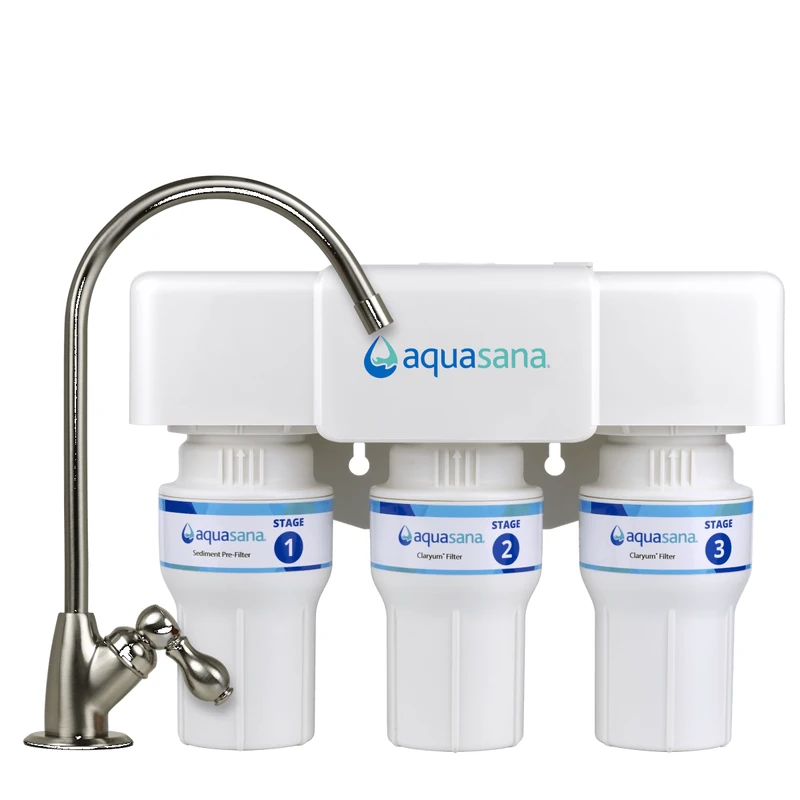
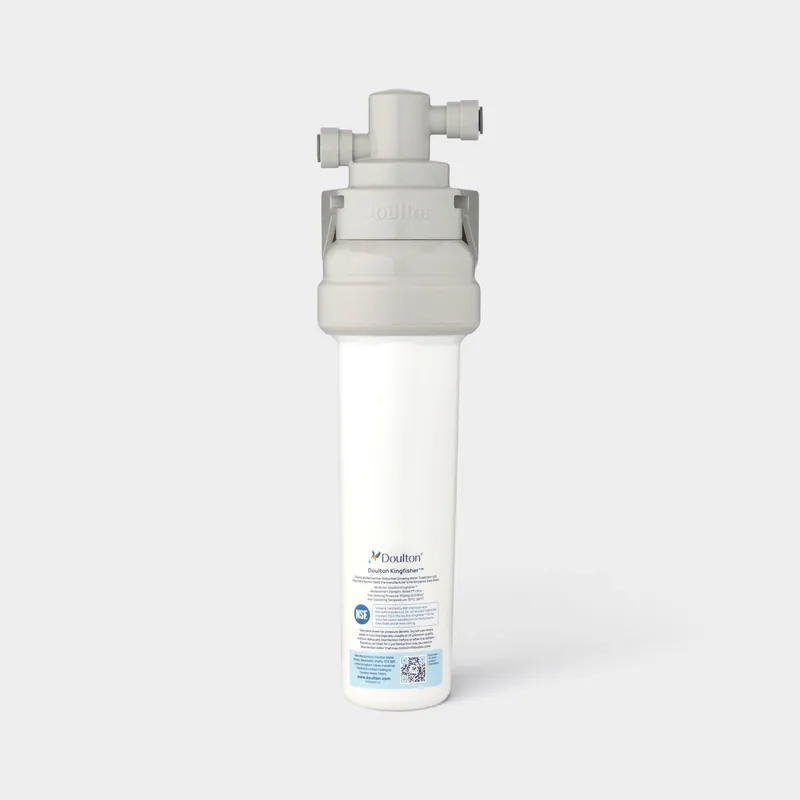
Both makers state certification to NSF/ANSI 53 including lead reduction. Check the listing for NSF/ANSI 42 Class I particulate reduction too, as EPA suggests.
Certification stated on Doulton’s Kingfisher product page, checked November 20, 2026.
We may earn a commission from these links at no extra cost to you. Learn more
How to use a lead filter correctly
Use it for drinking, cooking and baby formula, as EPA advises.
Use cold water. Hot water dissolves more lead, and most point-of-use filters are not made for hot water.
Install it exactly as directed and change the cartridge on schedule. A spent cartridge stops reducing lead.
If water has been sitting for hours, running the tap until it turns cold can help clear water that sat in pipes; your utility may give specific flushing advice.
Retest. A lab test of your filtered tap is the only way to confirm it is working.
What does not remove lead
Boiling. It does not remove lead.
Water softeners. Certified for hardness, not lead.
Whole-house filters. They miss lead added by plumbing after the filter.
UV. It treats germs, not metals.
Uncertified “lead” claims. If the claim is not on a certifier’s listing, it has not been independently verified.
Any filter whose listing shows NSF/ANSI 53 lead reduction, and ideally NSF/ANSI 42 Class I particulate reduction, as EPA recommends. That can be a pitcher, faucet-mount, refrigerator, under-sink carbon or reverse osmosis unit. The certification for your exact cartridge matters more than the style.
Does Brita remove lead?
It depends on the cartridge. Some pitcher cartridges are certified to NSF/ANSI 53 for lead and some basic ones are not. Look up the exact cartridge model in the NSF, WQA, IAPMO, UL or CSA listing and check for a lead reduction claim.
Does boiling water remove lead?
No. Boiling does not remove lead, and CDC notes boiling does not remove chemicals. Use cold water through a lead-certified filter, or bottled water, for drinking, cooking and baby formula.
Does a water softener remove lead?
Do not rely on one. Softeners are certified for hardness under NSF/ANSI 44, not for lead. Minnesota’s health department notes softened water can be more corrosive to pipes, which can raise lead and copper at the tap.
Will a whole-house filter remove lead from my pipes?
Usually not. EPA notes whole-house filters do not remove lead picked up from plumbing inside the building after the filter. Put lead protection at the tap you drink from.
What is the lead limit for drinking water?
EPA’s health goal for lead is zero. Utilities currently act when more than 10% of samples exceed 15 parts per billion; under the Lead and Copper Rule Improvements that action level drops to 10 ppb on November 1, 2027.
More water treatment guides
General information, not medical advice or a diagnosis, and not legal advice. For a result that worries you, call your local or state health department or a licensed water treatment professional, and retest after any treatment is installed. See our disclaimer.