Iron filter for well water, manganese, and rotten-egg (sulfur) smell
Last reviewed 2026-11-25.
By Luke Walker, editor (editorial policy). He is not a laboratory scientist, a licensed water-treatment professional, or a public-health official. Facts on this page come from the official sources cited below.
Match treatment to the lab numbers. Low dissolved iron may be handled by a softener; higher iron, manganese or sulfur usually needs an oxidizing filter, aeration or chlorination plus filtration. A rotten-egg smell on hot water only usually points to the water heater anode.
Test first, then treat. The right system depends on what is actually in your water. On a private well, use a state-certified lab (see what to test for). On city water, read your utility’s annual water quality report (Consumer Confidence Report). Already have results? See what your water test results mean.
Identify the problem first
Symptoms and likely causes (from NDSU Extension and Minnesota Department of Health)
What you see or smell
Likely cause
Clear water that turns orange or rusty after standing
Dissolved (ferrous) iron
Reddish water that clears within a day
Particulate iron, often from rusted pipes, tank or casing
Black or brown water, black stains
Manganese
Slime in the toilet tank, reddish-brown or white
Iron or sulfur bacteria
Rotten-egg smell on hot water only
Water heater anode reaction or bacteria in the heater
Rotten-egg smell on hot and cold
Hydrogen sulfide in the well or groundwater
EPA’s secondary standards are 0.3 mg/L for iron and 0.05 mg/L for manganese. These are cosmetic limits for staining and taste, but manganese also has health guidance (see below). A certified lab can measure iron, manganese, pH and hardness, which you need to size any treatment.
Iron and manganese treatment options
Water softener: removes dissolved iron and manganese in normal operation. NDSU Extension says some softeners handle up to 5 mg/L iron, others only 2 mg/L. Oxidized iron and iron bacteria clog the resin.
Greensand or other oxidizing media: typically effective up to about 10 mg/L iron; needs pH above about 6.8, regular backwashing (which needs enough well flow), and periodic regeneration.
Chlorination (or hydrogen peroxide) plus filtration: the accepted method above 10 mg/L, and it also controls iron bacteria.
Polyphosphate “sequestering”: hides low iron (under 2 mg/L) but does not remove it, and the metallic taste remains.
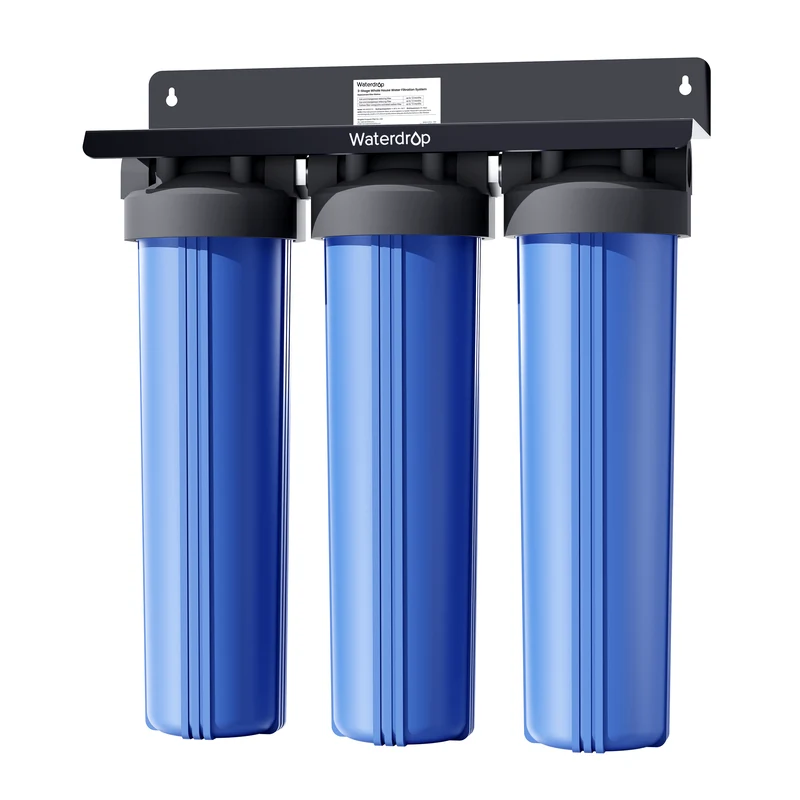
A whole-house iron and manganese filter (lab-tested, not certified)
Sponsored
Waterdrop cites SGS lab test results for iron and manganese; it is not certified for iron reduction, and lists no maximum iron level. Compare it with your lab result before buying.
Iron and manganese figures are SGS test results cited on Waterdrop’s product page, not a certification.
We may earn a commission from these links at no extra cost to you. Learn more
Rotten-egg smell: fixes by source
Hot water only. Minnesota’s health department suggests replacing the magnesium anode, often with aluminum, or disinfecting and flushing the heater. Removing the anode entirely can shorten the heater’s life. Have a plumber do it; raising heater temperature to kill bacteria carries scald risk.
Hot and cold. Options include activated carbon for levels under 1 mg/L, manganese greensand (up to about 6 mg/L), aeration plus filtration, continuous chlorination plus filtration, or ozonation plus filtration. If sulfur bacteria are in the well, shock-chlorinate (see well bacteria); a licensed well contractor may need to scrub the casing first.
Manganese and babies
Minnesota’s health department advises manganese at 100 µg/L or less for infants who drink tap water or formula made with it, and 300 µg/L or less for everyone older than one. Test before a baby drinks well water. Bathing in water above those levels is not a health concern.
Frequently asked questions
What is the best iron filter for well water?
It depends on the iron level, pH and whether manganese, sulfur or iron bacteria are present. NDSU Extension says greensand filters typically handle iron up to about 10 mg/L (with pH above about 6.8), and chemical oxidation plus filtration is the accepted method above 10 mg/L. A softener may handle low dissolved iron.
Why does my well water smell like rotten eggs?
Hydrogen sulfide gas, from groundwater, sulfur bacteria, or a reaction in the water heater. If only the hot water smells, the water heater anode is the likely cause. If hot and cold both smell, the source is the well or groundwater.
Is the sulfur smell in well water dangerous?
In most cases the smell does not relate to the sanitary quality of the water, but hydrogen sulfide gas can be harmful in enclosed spaces like well pits. Minnesota’s health department recommends testing for coliform bacteria and nitrate to be safe.
How do I get rid of the sulfur smell in well water?
For low levels (under 1 mg/L), activated carbon can work. For higher levels, oxidizing media such as manganese greensand (up to about 6 mg/L), aeration plus filtration, or continuous chlorination plus filtration. For hot-water-only odor, have a plumber replace the magnesium anode, often with aluminum.
Does a water softener remove iron, manganese or sulfur?
Softeners can remove some dissolved iron and manganese within the maker’s limits, but oxidized iron fouls the resin. They do not remove hydrogen sulfide odor.
Is manganese in well water harmful?
At high levels it can be. Minnesota’s health department advises 100 µg/L or less for infants who drink tap water or formula made with it, and 300 µg/L or less for everyone else. EPA’s secondary (cosmetic) standard is 50 µg/L.
More water treatment guides
General information, not medical advice or a diagnosis, and not legal advice. For a result that worries you, call your local or state health department or a licensed water treatment professional, and retest after any treatment is installed. See our disclaimer.