Water softener vs. water filter: what hard water actually needs
Last reviewed 2026-11-25.
By Luke Walker, editor (editorial policy). He is not a laboratory scientist, a licensed water-treatment professional, or a public-health official. Facts on this page come from the official sources cited below.
A softener removes hardness minerals (calcium and magnesium) to stop scale. A filter removes contaminants. A softener does not remove lead, nitrate, arsenic, PFAS, bacteria or chlorine taste, so many homes need both.
Test first, then treat. The right system depends on what is actually in your water. On a private well, use a state-certified lab (see what to test for). On city water, read your utility’s annual water quality report (Consumer Confidence Report). Already have results? See what your water test results mean.
What hardness is, and why it is not a health problem
Hard water carries dissolved calcium and magnesium. It causes scale in pipes and water heaters, spots on glassware, and soap scum. Minnesota’s health department notes those minerals are not harmful and may even be beneficial. A lab or a test kit gives hardness in mg/L or grains per gallon (1 grain per gallon = 17.1 mg/L).
What a softener does not remove
A conventional softener is certified under NSF/ANSI 44 for hardness. It is not a drinking-water filter and is not certified for:
Lead or copper
Nitrate
Arsenic
PFAS
Bacteria or viruses
Chlorine or chloramine taste
Hydrogen sulfide (rotten-egg) odor
Fluoride
Minnesota’s health department adds that softened water can corrode pipes, which can raise lead and copper at the tap. If your home has older plumbing, test for lead and consider a certified lead filter at the kitchen sink.
A softener stated as certified for hardness
Sponsored
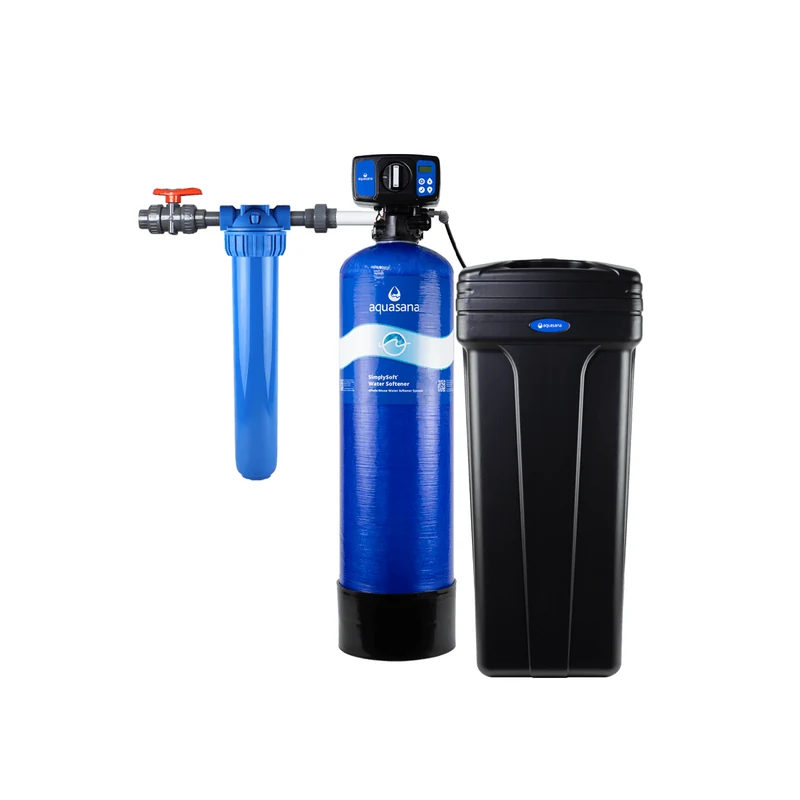
Aquasana states SimplySoft is IAPMO certified to NSF/ANSI 44 for hardness reduction. It treats hardness only; pair it with a certified drinking-water filter for anything else.
Certification stated on Aquasana’s SimplySoft 40,000 Grain product page, checked November 23, 2026.
We may earn a commission from these links at no extra cost to you. Learn more
Downsides to weigh
Sodium. Salt regeneration adds sodium; potassium chloride is an alternative.
Salt in the environment. Regeneration brine ends up in septic systems and waterways. Set the softener to your real hardness so it does not over-regenerate, and soften only the lines that need it (many homes skip outdoor taps and toilets).
City water already softened? Ask your utility. Softening already-soft water adds cost and can add corrosion.
New copper plumbing. Minnesota’s health department suggests waiting a few weeks before softening so pipes can form a protective layer.
Salt-free “conditioners”
Salt-free conditioners do not remove calcium and magnesium; they aim to change how scale forms. They are not softeners and are not certified under NSF/ANSI 44 for hardness reduction. Results depend on your water, so ask for independent test data before buying one.
Frequently asked questions
Water softener vs. filter: what is the difference?
A softener uses ion exchange to swap calcium and magnesium for sodium or potassium, which prevents scale. A filter reduces contaminants such as chlorine, lead or PFAS. Many homes with hard water need both: a softener for the house and a certified filter at the kitchen tap.
Does a water softener remove chlorine, lead, nitrates or fluoride?
No. Softeners are certified under NSF/ANSI 44 for hardness. They are not certified for chlorine, lead, nitrate, fluoride, PFAS, arsenic or bacteria.
Does a water softener remove iron or manganese?
Some can remove small amounts of dissolved iron and manganese. NDSU Extension says some softeners handle up to 5 mg/L of iron and others only 2 mg/L. Iron that has already oxidized, or iron bacteria, fouls the resin; treat higher levels with an iron filter first.
What hardness level needs a softener?
Softening is a personal choice, not a health requirement. Minnesota’s health department says water above about 7 grains per gallon (120 mg/L) may call for a softener to protect appliances and reduce scale.
Water softener or filter first?
On a well, sediment and iron treatment usually go before the softener, and a reverse osmosis or carbon filter at the kitchen tap goes after it, where softened water also protects the RO membrane from scale.
Is softened water safe to drink?
For most people, yes. A salt-based softener adds sodium. Minnesota’s health department suggests anyone with high blood pressure ask a doctor, keep an unsoftened tap for drinking, or use potassium chloride instead.
More water treatment guides
General information, not medical advice or a diagnosis, and not legal advice. For a result that worries you, call your local or state health department or a licensed water treatment professional, and retest after any treatment is installed. See our disclaimer.