Water filter for arsenic: reverse osmosis, adsorptive media and arsenic III vs. V
Last reviewed 2026-11-25.
By Luke Walker, editor (editorial policy). He is not a laboratory scientist, a licensed water-treatment professional, or a public-health official. Facts on this page come from the official sources cited below.
Reverse osmosis or adsorptive media certified for arsenic can reduce it at the drinking tap, but most certifications are for arsenic(V). If your well has arsenic(III), it usually needs pre-oxidation. Softeners, carbon filters alone and boiling do not remove arsenic.
Test first, then treat. The right system depends on what is actually in your water. On a private well, use a state-certified lab (see what to test for). On city water, read your utility’s annual water quality report (Consumer Confidence Report). Already have results? See what your water test results mean.
Why arsenic type matters
Groundwater can contain two forms: arsenic(III) and arsenic(V). Most home treatment removes arsenic(V) far better. Minnesota’s health department notes that pre-oxidation (chlorination, aeration or ozonation) may be needed so treatment removes the type you have, and that sulfate levels above 100 ppb can also affect which treatment works. NSF’s arsenic claim for filters is for pentavalent arsenic at incoming levels of 50 ppb or less.
Ask your certified lab whether it can speciate arsenic (report III and V separately), or work with a water treatment professional.
Treatment options
Reverse osmosis (point of use), certified under NSF/ANSI 58 for arsenic.
Adsorptive media, a charged media bed that holds arsenic; NSF lists certified under-sink filters and pitchers for pentavalent arsenic at incoming levels of 50 ppb or less.
Anion exchange, oxidation filtration, chlorination plus filtration and ozonation plus filtration, often whole-house and often where iron is also high.
Distillation for small volumes.
EPA’s limit for public water is 10 µg/L (10 ppb) and its health goal is zero. Minnesota’s health department suggests considering treatment if arsenic is detected at any level, and highly recommends action above 10 µg/L.
Reverse osmosis stated as certified for arsenic V
Sponsored
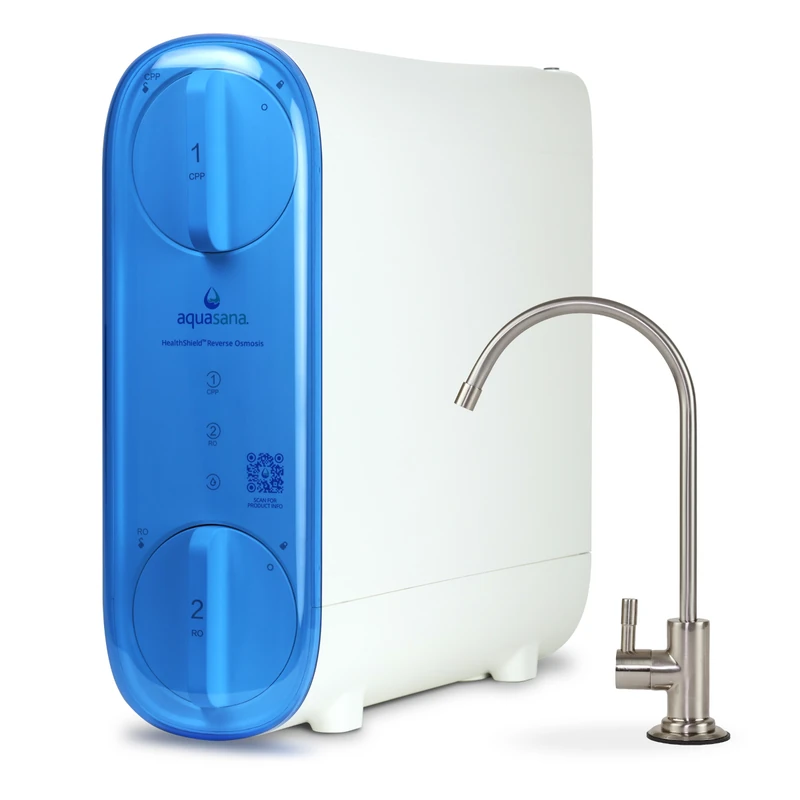
Aquasana states HealthShield is IAPMO certified to reduce pentavalent arsenic, and says it will not convert trivalent arsenic to pentavalent. Confirm your arsenic type first.
Certification stated on Aquasana’s HealthShield Reverse Osmosis product page, checked November 23, 2026.
We may earn a commission from these links at no extra cost to you. Learn more
Keep it working
Arsenic media and RO membranes wear out without warning signs: you cannot taste arsenic. Follow the replacement schedule and test the treated water periodically, as Minnesota’s health department advises.
Frequently asked questions
What is the best water filter for arsenic removal?
Reverse osmosis certified for arsenic under NSF/ANSI 58, or an adsorptive media filter certified under NSF/ANSI 53 for pentavalent arsenic, are common point-of-use choices. Because certification is usually for arsenic V, ask a lab to speciate arsenic III and V, or have a professional add pre-oxidation.
Does reverse osmosis remove arsenic?
RO reduces pentavalent arsenic (arsenic V) well. Trivalent arsenic (arsenic III) passes through more easily, so wells with arsenic III often need oxidation first, for example by chlorination, aeration or ozonation.
Do carbon filters or water softeners remove arsenic?
Not on their own. Minnesota’s health department says conventional softeners and activated carbon filters alone will not remove arsenic.
Does boiling remove arsenic?
No. Boiling concentrates arsenic because some water evaporates.
Is water with arsenic safe for showering?
Generally yes. Minnesota’s health department says skin does not easily absorb arsenic, so water is safe for washing, bathing and brushing teeth unless arsenic is above 500 µg/L. Treat the water you drink and cook with.
More water treatment guides
General information, not medical advice or a diagnosis, and not legal advice. For a result that worries you, call your local or state health department or a licensed water treatment professional, and retest after any treatment is installed. See our disclaimer.